
Wings Machinery
China has become a major force in the global material-handling industry. Its manufacturers now serve warehouses, factories, ports, and distribution centers worldwide. This article examines the companies shaping China’s Electric Forklift market and explains why their products attract international buyers.
The discussion will consider established names such as BYD, HELI, Hangcha, EP Equipment, and Noblelift. Each manufacturer follows a different path. Some focus on lithium-ion battery systems and fast charging. Others emphasize durable designs, affordable maintenance, or broad dealer networks. Real work reveals more. A forklift moving pallets through a cold warehouse needs different strengths from one operating beside a busy loading dock.
I will compare product range, lifting capacity, battery technology, operator comfort, safety features, service support, and export experience. These details matter more than a polished brochure. Factory scale can suggest reliability, but it cannot replace field performance or responsive technical support. Buyer feedback, warranty terms, spare-parts availability, and local training also deserve careful attention. No ranking is perfect. Market positions change, and published specifications may not reflect every regional model. That limitation requires honest checking.
The goal is not to name one universal winner. Instead, this guide offers a practical framework for identifying the most suitable Chinese manufacturer for different operating conditions. Readers should verify certifications, service arrangements, charging requirements, and total ownership costs before making a purchase. A lower initial price may become expensive when batteries, tires, software, or downtime are overlooked. Experience teaches a simple lesson: the best Electric Forklift is the one that performs reliably in its actual working environment.
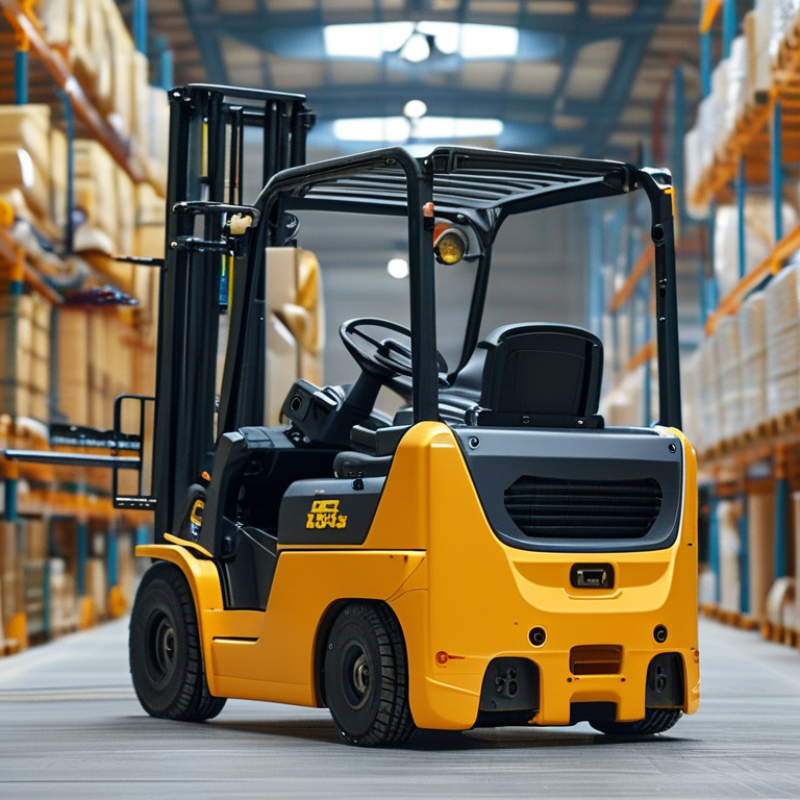
China’s electric forklift industry is expanding as warehouses seek quieter, cleaner, and more efficient material-handling equipment. Demand is strongest in logistics centers, food storage, manufacturing, and retail distribution. The leading manufacturers generally offer complete product ranges, including compact warehouse trucks, counterbalance forklifts, and heavy-duty electric models. Their advantages often include local production, battery integration, and broad service coverage.
Lithium-ion batteries are changing daily operations. They support fast charging, opportunity charging, and longer working cycles. Some facilities now charge equipment during short breaks instead of replacing batteries. Energy monitoring is also becoming more common. However, battery performance depends on temperature, load weight, charging habits, and floor conditions. Marketing claims can look impressive. Real warehouse trials reveal more.
Automation is another important trend. Electric forklifts increasingly include fleet software, operator access controls, cameras, and collision alerts. These features can improve visibility, but they do not replace trained operators or clear traffic rules. Buyers should examine lifting capacity, mast visibility, turning radius, noise levels, spare-parts access, and technician response times. Battery warranties deserve close attention too. A low purchase price may hide higher service costs. In my experience, a practical test during the busiest work shift gives better evidence than a polished demonstration. The industry is moving quickly, yet some published comparisons remain incomplete and should be checked against actual site data.
China’s leading electric forklift manufacturers are increasingly divided by application, not just lifting capacity. Warehouse-focused producers build compact three-wheel and four-wheel trucks for narrow aisles. Their strengths include tight turning radiuses, adjustable steering, and smooth low-speed control. Operators notice these details during long shifts.
Other manufacturers concentrate on heavy-duty electric forklifts for factories, ports, and outdoor yards. They develop reinforced frames, larger battery packs, sealed electrical systems, and stronger traction motors. Some offer lithium-ion platforms with opportunity charging during breaks. This can reduce battery-changing work, but charging infrastructure still needs careful planning. A forklift cannot solve a poor power layout.
Several Chinese producers specialize in customized fleet solutions. They may adjust mast height, fork dimensions, cabin protection, tire type, or software settings. Export-oriented factories often provide multilingual manuals, spare-parts programs, remote diagnostics, and operator training. Reliable suppliers also document load testing, battery protection, brake performance, and quality-control procedures. Buyers should request test records rather than trust polished brochures. Factory visits help, though a short demonstration can hide maintenance weaknesses. An on-site trial with real pallets is more revealing. I have found that after-sales response matters as much as the initial quotation. This point is easy to underestimate. Manufacturers with strong engineering teams can adapt equipment for cold storage, uneven floors, or frequent loading cycles. Yet customization may increase delivery time and replacement costs. A careful buyer should compare total operating expenses, service coverage, and parts availability before choosing a manufacturing partner.
| Manufacturer Profile | Primary Electric Forklift Specialties | Typical Load Capacity | Common Battery Options | Typical Mast and Lift Configurations | Key Application Strengths | Common Compliance and Service Features |
|---|---|---|---|---|---|---|
| Large full-range industrial manufacturer | Counterbalance trucks Warehouse trucks Reach trucks | 1.5–5.0 tonnes for mainstream electric counterbalance models | Lead-acid batteries; lithium-ion options on newer product lines | Two-stage and three-stage masts; lifting heights commonly from 3 to 6 metres | General manufacturing, logistics, retail distribution, food processing and indoor material handling | Export-oriented configurations, regenerative braking on selected models, programmable driving modes and dealer-based spare-parts support |
| Warehouse equipment specialist | Pallet trucks Stackers Reach trucks | 1.2–2.5 tonnes for pedestrian and ride-on warehouse equipment | Lead-acid; lithium-ion battery packs increasingly available for multi-shift use | Initial lift, straddle-leg and reach-mast designs; lift heights commonly up to approximately 6 metres | Distribution centres, narrow aisles, supermarkets, cold-chain storage and light industrial facilities | Compact turning radii, tiller-head safety controls, battery-change solutions and onboard diagnostic displays |
| Lithium-ion focused manufacturer | Lithium counterbalance trucks Electric pallet trucks Energy-efficient fleets | 1.5–3.5 tonnes in common lithium-powered configurations | Lithium iron phosphate and other lithium-ion battery systems, depending on model and market | Two-stage and three-stage masts; side-shift and fork-positioner options are commonly offered | High-utilisation warehouses, three-shift operations, food and beverage facilities and applications requiring opportunity charging | Integrated battery management systems, thermal protection, onboard chargers on selected models and reduced routine battery maintenance |
| Heavy-duty electric forklift producer | High-capacity counterbalance trucks Container handling Port and steel logistics | 4.0–16.0 tonnes, with larger capacities available in specialised configurations | High-voltage lithium-ion systems; lead-acid options may remain available for selected applications | Heavy-duty two-stage or three-stage masts; reinforced chassis and high-capacity attachments | Metal processing, timber, ports, construction-material yards and demanding outdoor operations | High-capacity braking systems, reinforced overhead guards, sealed electrical components and custom attachment engineering |
| Compact electric forklift manufacturer | Three-wheel trucks Compact four-wheel trucks Indoor handling | 1.0–2.0 tonnes | Lead-acid and lithium-ion options, depending on the operating cycle | Compact two-stage and three-stage masts; tight turning radius for restricted work areas | Small warehouses, workshops, retail backrooms, production lines and confined indoor spaces | Low noise, low local emissions, electronic steering on selected models and compact battery compartments |
| Export-oriented OEM manufacturer | Custom specifications Private-label production Regional configurations | 1.5–7.0 tonnes across standard and customised electric models | Lead-acid, lithium-ion and market-specific battery configurations | Custom lift heights, carriage widths, fork lengths, cabin options and attachment packages | International distributors, equipment rental fleets, project logistics and regional warehouse operations | Custom paint and control layouts, multilingual manuals, export packaging, spare-parts programmes and conformity documentation for destination markets |
| Smart warehouse and automation specialist | Automated guided forklifts Driver-assist systems Fleet management | 1.5–3.0 tonnes for automated pallet movement and stacking applications | Lithium-ion battery systems are commonly used to support frequent charging cycles | Reach, stacker and counterbalance platforms with navigation sensors and programmable lift functions | Automated warehouses, repetitive pallet transport, high-throughput distribution centres and manufacturing logistics | Laser or vision navigation, obstacle detection, traffic management, fleet dashboards and integration with warehouse-control systems |
| Capacity, lift-height and battery figures represent typical published ranges for Chinese electric-forklift product categories. Exact specifications vary by configuration, battery pack, mast, attachment, operating environment and destination-market requirements. | ||||||
China’s leading electric forklift manufacturers compete on more than purchase price. They differ in battery systems, operator comfort, software, and service coverage. WITS industry statistics show electric trucks represented the largest global power category in 2023. That shift makes technical support increasingly important.
In warehouse evaluations, established manufacturers usually offer stronger dealer networks and better parts availability. Export-focused producers often compete with lower prices, lithium-ion options, and flexible configurations. According to Interact Analysis, warehouse automation continues expanding, increasing demand for connected material-handling equipment.
Still, cheaper equipment may carry hidden costs. Battery diagnostics, charger compatibility, and software updates can affect uptime more than the original quotation.
Performance also depends on the working environment. A compact three-wheel model suits narrow aisles and polished floors. A heavier four-wheel unit handles uneven yards more confidently.
Lithium-ion batteries support opportunity charging, while lead-acid systems may remain practical for simpler operations. Energy savings are real, but not automatic.
Poor charging habits can reduce the expected return. Some comparisons overlook operator training, which is a weakness in many buying guides.
Tips: Compare total cost over five years, not only the purchase price. Request duty-cycle data from comparable sites. Check local technician response times, spare-part stock, warranty limits, and battery replacement terms. The U.S. Department of Energy notes that industrial vehicle efficiency depends heavily on operating conditions, so laboratory claims need cautious interpretation.
What Are China's Top Electric Forklift Manufacturers?
When comparing Chinese electric forklift manufacturers, battery quality deserves more attention than brochure range. Lithium-ion packs usually support faster charging, stable voltage, and fewer routine maintenance tasks. Lead-acid batteries may still suit operations with longer shifts and planned battery changes. Check cell quality, battery-management systems, charging limits, and replacement costs. A larger battery is not automatically better. It can increase weight, charging time, and energy use.
Technology should improve control without confusing operators. Look for regenerative braking, adjustable drive modes, fleet monitoring, and clear fault displays. In warehouse trials, test turning near racking, visibility over the mast, and pedal response on uneven floors. Safety features should include speed control, anti-rollback protection, seat detection, warning lights, and audible alerts. Protective systems are useful, but they cannot replace training or sensible traffic planning. That point is often overlooked.
Tips: Ask for battery cycle data, not only advertised runtime. Inspect cable protection and charging connectors. Request service intervals in writing. Test the forklift with a real pallet, narrow aisles, and a cold-start condition. Confirm whether technicians can diagnose battery faults locally. Some evaluations focus too much on lifting capacity. I have found that operator comfort, brake feel, and simple maintenance often affect daily productivity more. Even strong equipment may underperform when charging space, ventilation, or staff instruction is poorly planned.
Battery cycle life is a practical benchmark when evaluating electric forklift platforms. The figures below show representative full-cycle ranges for commonly used industrial battery chemistries; actual results vary with depth of discharge, temperature, charging method, and maintenance.
How to evaluate: Lead-acid systems generally have lower initial cost but require longer charging, ventilation, and regular watering. Lithium iron phosphate (LFP) batteries typically support more cycles, opportunity charging, integrated battery-management systems, and reduced routine maintenance. When comparing suppliers, also verify compliance with ISO 3691-1, EN 1175, or UL 583 where applicable, along with thermal protection, interlocks, overload monitoring, and pedestrian warning systems.
Reference basis: typical industrial battery performance ranges reported in technical guidance from Battery University and forklift battery suppliers; values are comparative estimates rather than company-specific specifications.
What Are China’s Top Electric Forklift Manufacturers?
Choosing the Right Chinese Electric Forklift Manufacturer
Choosing a Chinese electric forklift manufacturer requires more than comparing prices. A reliable supplier should understand warehouse traffic, floor conditions, load patterns, and operator habits. Ask for the rated capacity at different lift heights. A two-ton forklift may handle less at maximum elevation.
Inspect the battery system carefully. Lithium batteries can reduce charging delays, but compatibility matters. Request cycle-life data, charging guidance, thermal protection details, and replacement costs. Ask for records. The manufacturer should also provide clear manuals, wiring diagrams, spare-parts lists, and training materials. These details reveal engineering discipline better than polished photos.
Production quality deserves direct verification. Review factory testing procedures, weld inspection methods, controller calibration, and final load testing. If possible, observe a demonstration with your actual pallet dimensions. Check whether the manufacturer can support remote diagnostics and local service response. Export experience is useful, but it does not guarantee excellent support in every market.
No supplier looks perfect on paper. This is where buyers often rush. A lower quotation may hide weaker tires, limited software access, or expensive battery replacement. Request references from warehouses with similar operating hours and temperatures. Compare warranty terms line by line. A dependable Chinese manufacturer will answer technical questions clearly, admit limitations, and suggest practical improvements rather than promising everything.
: Match the supplier to your working environment, load pattern, and service needs. A warehouse may need compact trucks with tight turning radiuses. A factory yard may require stronger traction and sealed electrical systems. Price alone is not enough.
A compact three-wheel forklift often fits narrow aisles and polished floors. Adjustable steering can reduce operator fatigue during long shifts. Smooth low-speed control also matters near racks and pallets. Measure aisle width carefully.
Four-wheel models usually provide greater stability on uneven floors and outdoor yards. They may handle heavier loads and stronger traction demands. Check rated capacity at the required lifting height. A two-ton rating may decrease at maximum elevation.
Not always. Lithium-ion batteries can support opportunity charging during breaks. They may reduce battery-changing work and charging delays. However, chargers, wiring, thermal protection, and replacement costs need careful planning. Poor power layouts can erase expected savings.
Request load-test records, battery data, wiring diagrams, and spare-parts lists. Also ask for brake tests, controller calibration records, and quality-control procedures. Cycle-life claims should include operating conditions. Polished brochures reveal little.
Visit the factory when possible, then observe actual testing procedures. Ask to inspect weld checks, final load testing, and electrical inspections. Use your real pallet dimensions during an on-site trial. A short demonstration may hide maintenance weaknesses.
Check technician response times, spare-parts stock, warranty limits, and software support. Ask whether remote diagnostics are available in your operating area. Request references from sites with similar hours and temperatures. After-sales response may matter as much as the quotation.
Customization may adjust mast height, fork dimensions, tires, cabin protection, or software settings. It can help with cold storage, uneven floors, or frequent loading cycles. Delivery may take longer, and replacement parts may cost more. More customization is not automatically better.
China’s electric forklift industry is evolving rapidly as warehouses, factories, and distribution centers seek cleaner, quieter, and more efficient material-handling solutions. This article reviews the market’s major trends, including the growing adoption of battery-powered equipment, improvements in energy efficiency, smarter fleet management, and demand for compact models suited to modern indoor operations. It also explains how leading Chinese manufacturers differ in product range, customization, production capabilities, service support, and application focus, without relying on brand-specific promotion.
When comparing an Electric Forklift, buyers should evaluate battery chemistry, charging speed, operating duration, motor performance, control systems, ergonomics, stability, and built-in safety functions. After-sales service, spare-parts availability, warranty coverage, compliance documentation, and total operating cost are equally important. By matching equipment specifications with workload, facility layout, floor conditions, lifting requirements, and future expansion plans, businesses can select a dependable Chinese manufacturer and achieve a practical balance between productivity, safety, sustainability, and long-term value.
