
Wings Machinery
Choosing the best Mobile Excavator is not about selecting the largest machine. It is about matching power, mobility, reach, and operating cost to the worksite. A compact unit may outperform a heavier excavator on narrow urban roads. A larger model may be better for deep trenching, quarry loading, or long-distance lifting.
“Machine choice should follow the job, not the other way around,” says Markku Simula, a construction equipment specialist with extensive field experience. This principle sounds simple. It is often ignored. Buyers can focus too heavily on horsepower, while overlooking transport limits, ground pressure, fuel use, and operator visibility.
A reliable evaluation begins with the working conditions. Measure the access road before comparing specifications. Check whether the Mobile Excavator can turn beside buildings, cross weak surfaces, or travel between separate projects without excessive preparation. Observe the boom position from the cab. Small blind spots can become serious safety concerns around workers, vehicles, and underground services.
Hydraulic performance also deserves close attention. Smooth control matters when placing pipes or working beside existing structures. High breakout force matters when removing compacted soil or broken pavement. These needs are not identical.
Maintenance should be considered early. Accessible filters, clear service points, and dependable dealer support can reduce costly downtime. Still, no machine is perfect. A model with excellent reach may sacrifice transport convenience. A highly compact excavator may struggle with demanding lifting tasks.
The best decision comes from comparing real site demands, not impressive brochures. Record daily distances, soil conditions, attachment use, and operator feedback. Then choose the machine that performs consistently, safely, and economically.
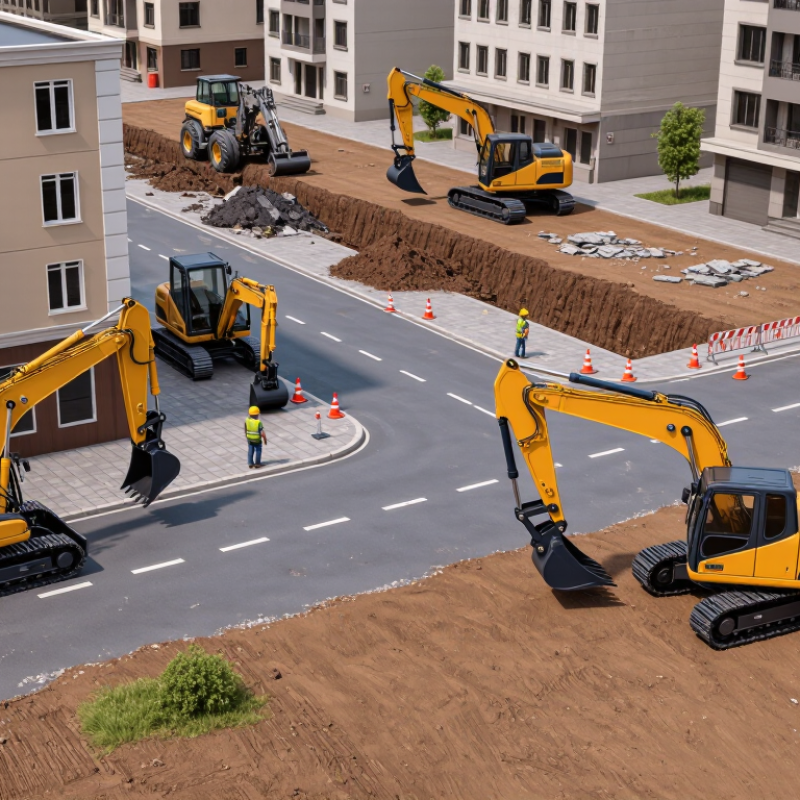
Define the job before comparing machine specifications. Record the soil type, trench depth, lifting needs, attachment weight, and daily working hours. A wheeled excavator may suit paved streets and urban projects, while rough ground may demand stronger traction and stability. Measure the narrowest access point carefully. A machine that reaches the site but cannot turn is an expensive mistake.
KPMG’s 2023 Global Construction Survey reported that only 31% of projects met planned cost and schedule targets within 10%. That figure makes accurate planning more than paperwork. Estimate the required digging depth and reach from actual drawings, not casual guesses. Check the machine’s operating weight against ground pressure limits and transport capacity. For lifting, compare the rated load at the planned working radius. The maximum lifting figure can look impressive. It may not reflect real site conditions.
Operator availability also matters. The Associated General Contractors of America reported in its 2024 workforce survey that 94% of firms struggled to fill construction positions. Choose controls that support consistent operation and allow practical training time. Consider fuel use, hydraulic flow, tire condition, visibility, and service access. I have seen teams focus on arm reach and overlook turning clearance. That mistake is easy to repeat. Recheck the plan with the operator before purchase or rental. A small mismatch can create hours of delay.
Choosing the best mobile excavator starts with understanding the worksite, not the machine’s appearance. Wheeled excavators move quickly between paved areas and multiple urban jobs. Tracked excavators provide stronger stability on mud, slopes, and loose ground. Compact excavators fit narrow gardens, alleys, and indoor renovation sites. However, compact size often means less lifting capacity and digging depth.
Compare operating weight, bucket capacity, maximum reach, and tail swing. A mid-sized excavator may handle drainage trenches, foundation work, and material loading efficiently. Larger machines suit deep excavation and demanding rock or soil conditions, but they need more transport space. Check ground pressure before choosing. Low ground pressure can protect soft surfaces, though it may reduce stability during heavy lifting.
I once focused too much on digging force and underestimated transport time. That choice increased costs and slowed the project. Experience taught me to compare daily travel distance, access width, fuel use, and attachment changes together. Hydraulic flow also matters when using breakers, augers, or grapples. Ask an experienced operator to test visibility, control response, and stability before purchase.
Tips: Measure the narrowest entrance first. Match machine weight to the ground. Confirm attachment compatibility. Inspect service access and maintenance records. Leave operating capacity below the maximum rating, especially on uneven terrain. A smaller excavator can outperform a larger one when access, transport, and precision matter most.
Choosing the best mobile excavator starts with the worksite, not the brochure.
Engine power affects digging force, travel speed, and fuel use. A 75-horsepower engine may handle clay, but steep access roads demand more reserve. Match rated power to the machine’s operating weight and daily workload. During field checks, listen for uneven idling and watch for smoke under load. These details often reveal problems that specifications hide. More power is not always better. An oversized engine can increase fuel costs without improving production.
Hydraulic performance determines how smoothly the boom, arm, and bucket respond.
Check pump flow, operating pressure, and cycle times together. High pressure alone does not guarantee useful digging performance. A balanced system should lift a loaded bucket without hesitation, while fine controls remain steady near buried utilities. Test the machine with cold and warm hydraulic oil. Some weaknesses appear only after sustained operation. Select attachments by soil, trench width, and lifting needs. A narrow bucket suits utility trenches, while a hydraulic breaker needs compatible flow and cooling capacity.
Tips: Request service records and measure fuel use across a normal shift. Inspect hose fittings, cylinder rods, tire wear, and safety alarms. Ask an experienced operator to run the excavator, not just a salesperson. Short tests can mislead. If the cab feels noisy after ten minutes, reconsider the machine. Leave room for doubt. Reliable choices come from observed performance, verified maintenance, and realistic attachment planning.
Choosing a mobile excavator starts with operating cost, not purchase price. A practical review should record fuel use, transport charges, tire wear, and scheduled downtime. Compare expected hours with the machine’s rated fuel consumption. Then test the estimate against local fuel prices and real project cycles. A neat spreadsheet can still mislead. According to the U.S. Energy Information Administration’s 2024 outlook, energy prices remain sensitive to regional demand and supply changes.
Safety deserves direct attention. Check visibility around the counterweight, camera coverage, access steps, emergency controls, and automatic slew or travel warnings. Confirm that the cab protects operators from falling objects and excessive noise. OSHA recorded 39 trenching and excavation fatalities in the United States during 2022. That figure makes ground conditions, exclusion zones, and competent supervision essential. A larger machine is not automatically safer.
Maintenance needs should fit the worksite. Inspect service access, grease-point locations, filter replacement intervals, hydraulic hose routing, and diagnostic support. A daily walkaround should reveal leaks, damaged tracks, loose pins, or unusual sounds before failure becomes expensive. The U.S. Bureau of Labor Statistics reported 1,075 construction fatalities in 2023, including many hazards beyond excavation. Preventive maintenance cannot remove every risk, but neglect creates avoidable ones. Check the service schedule carefully. Some savings disappear quickly when technicians need difficult access or specialized tools.
How to Choose the Best Mobile Excavator?
Selecting a reliable supplier matters as much as choosing the excavator itself. The machine may look impressive, but weak after-sales support can stop a project quickly. Ask for verified operating-hour records, maintenance histories, and references from similar job sites. Request a written delivery schedule, warranty scope, spare-parts availability, and technician response time. Vague promises are warning signs.
Check the supplier’s technical knowledge. They should match the excavator’s operating weight, digging depth, attachment system, and ground conditions to your work. A supplier should explain hydraulic flow, tire stability, transport limits, and fuel performance clearly. The 2024 Global Status Report for Buildings and Construction states that the sector used 32% of global energy in 2023. Therefore, compare fuel consumption under realistic workloads, not only brochure figures. Request a monitored field test when possible. Numbers can be optimistic.
Review the total purchase cost over three to five years. Include transport, scheduled servicing, filters, tires, attachments, insurance, and expected downtime. The European Commission reports that construction represents about 10% of the European Union’s economy, showing how strongly equipment reliability affects wider productivity. Still, reports are not site experience. Inspect the machine personally, test controls in cold-start conditions, and examine hydraulic leaks around joints. Negotiate milestone payments after inspection and commissioning. The cheapest quotation may become the most expensive choice. I have learned that supplier communication often reveals more than polished specifications. A missed technical question should not be ignored.
| Evaluation Dimension | Recommended Specification or Target | Why It Matters | Practical Verification Before Purchase |
|---|---|---|---|
| Operating Weight | Select a class that matches the transport limit and jobsite access; common wheeled excavators range from approximately 10 to 25 tonnes. | A heavier machine generally offers greater stability and lifting capacity, but it may increase transport cost and ground pressure. | Compare the complete operating weight with local road limits, trailer capacity, and the weight of the selected attachment. |
| Engine Power | Approximately 70–170 kW is common for medium and large wheeled excavators. | Power influences digging performance, hydraulic output, travel speed, and the ability to operate demanding attachments. | Request the rated power, emissions certification, fuel-consumption data, and performance figures under working conditions. |
| Maximum Digging Depth | Approximately 4.5–6.5 m for many general-purpose mobile excavators. | The required depth depends on drainage, utility, foundation, roadwork, and trenching applications. | Check the lifting and digging chart with the actual boom, arm, bucket, and optional equipment configuration. |
| Maximum Reach | Approximately 7–10 m for typical medium-sized machines. | Greater reach improves working coverage and can reduce repositioning on roadside and urban projects. | Confirm maximum reach at ground level and compare it with the required excavation radius and site boundaries. |
| Bucket Capacity | Approximately 0.25–1.20 m³, depending on machine size and material density. | A larger bucket can improve productivity in loose soil, while a smaller bucket may provide better control in confined or hard ground. | Match bucket capacity to the material density, hydraulic capacity, tipping load, and required cycle time. |
| Hydraulic Flow | Approximately 120–300 L/min for many medium and large wheeled excavators; auxiliary circuits may differ. | Hydraulic flow determines compatibility with breakers, augers, grapples, cutters, sweepers, and other attachments. | Verify standard and high-flow auxiliary output, pressure, coupler compatibility, and continuous-flow capability. |
| Travel Speed | Approximately 20–35 km/h for road-capable wheeled excavators. | Higher travel speed can reduce movement time between nearby work areas, although it does not replace proper road transport for long distances. | Confirm speed in both travel ranges and review braking, steering, tire, and road-use requirements. |
| Stability and Lifting Capacity | The lifting chart should cover the intended load at the required reach, with an appropriate safety margin. | Wheeled excavators can work efficiently on paved surfaces, but stability varies with ground conditions, outriggers, blade position, and load radius. | Request certified load charts for different working positions and test the machine with representative lifting tasks. |
| Ground Clearance and Axle Design | Choose clearance, oscillating axle design, and driveline configuration according to road quality and off-road conditions. | These features affect mobility over curbs, uneven ground, slopes, and temporary construction access roads. | Inspect axle articulation, differential locks, tire condition, undercarriage protection, and manufacturer-rated gradients. |
| Fuel Efficiency | Prefer load-sensing hydraulics, automatic engine-idle control, selectable work modes, and documented fuel-use results. | Fuel and operating costs can represent a substantial part of the machine's total cost over its service life. | Compare fuel consumption at idle, light work, and heavy work instead of relying only on a single promotional figure. |
| Operator Visibility and Safety | Look for a clear cab view, rear and side visibility, reliable mirrors or cameras, rollover protection, and emergency controls. | Good visibility helps reduce collision risks around workers, vehicles, utilities, and public traffic. | Inspect the cab from the operator's seat and verify alarms, cameras, lighting, seat belts, access steps, and safety documentation. |
| Emissions Compliance | The engine must meet the emissions stage required in the operating country or region. | Non-compliant equipment may face import restrictions, operating limitations, or additional after-treatment costs. | Check the engine emissions certificate, serial-number records, after-treatment system, and fuel or fluid requirements. |
| Supplier Technical Capability | The supplier should provide complete specifications, manuals, parts information, training, and service procedures. | Technical support affects uptime, safe operation, maintenance quality, and long-term resale value. | Ask for service response times, technician coverage, spare-parts lead times, warranty terms, and references from comparable users. |
| Parts Availability | Prioritize documented availability of filters, hoses, seals, wear parts, sensors, and commonly replaced components. | Waiting for a small replacement part can cause disproportionate downtime during active projects. | Request a recommended initial parts list, stock locations, delivery estimates, and prices for scheduled-maintenance items. |
| Warranty Coverage | Review coverage duration, operating-hour limits, exclusions, travel costs, and procedures for warranty claims. | A longer headline warranty is less valuable if major components or labor costs are excluded. | Obtain the complete written warranty before placing the order and confirm who pays for diagnosis, transport, and repairs. |
| Inspection and Acceptance | Complete a documented pre-delivery inspection and functional test before final acceptance. | Testing can identify leaks, unusual noise, control problems, transport damage, or specification differences. | Record serial numbers, operating hours, hydraulic pressure, travel function, attachment operation, visible damage, and unresolved defects. |
| Total Cost of Ownership | Evaluate purchase price together with transport, taxes, fuel, maintenance, attachments, insurance, financing, and expected resale value. | The lowest initial price may result in higher lifetime costs if productivity, support, or parts availability is poor. | Compare a multi-year cost estimate using the same annual operating hours, fuel price, maintenance schedule, and attachment requirements. |
| Purchase Contract | Specify the exact configuration, delivery date, payment milestones, documentation, warranty, inspection terms, and remedies for non-conformity. | A detailed contract reduces misunderstandings between the buyer and supplier. | Match the contract with the quotation, technical configuration, inspection report, shipping documents, and final invoice before payment. |
Record fuel, transport, tire wear, servicing, attachments, insurance, and downtime. Purchase price alone can mislead. Use local fuel prices and real project hours.
Compare rated fuel use with your expected workload. Test digging, traveling, and idling separately. Brochure figures may look optimistic.
Check counterweight visibility, cameras, access steps, emergency controls, and travel warnings. Inspect cab protection against falling objects and excessive noise. A larger machine is not automatically safer.
Review ground strength, slopes, traffic routes, and exclusion zones. Keep competent supervision near trenches and unstable edges. Small mistakes can become serious.
Inspect grease points, filters, hydraulic hoses, service access, and diagnostic support. During each walkaround, look for leaks, loose pins, damaged tires, and unusual sounds. Do it daily.
Request operating-hour records, maintenance history, references, warranty details, and delivery dates. Ask about spare parts and technician response times. Vague answers are warning signs.
Confirm operating weight, digging depth, attachment compatibility, hydraulic flow, tire stability, and transport limits. Match these details to your soil and workload. Do not rely on appearance.
Yes, when possible. Test controls during a cold start and inspect hydraulic joints for leaks. Monitor fuel use under realistic work. I might still underestimate difficult ground conditions.
Project costs across three to five years. Include servicing, filters, tires, attachments, transport, insurance, and downtime. The lowest quotation may become expensive later.
Arrange inspection and commissioning before final payment. Use milestone payments when appropriate. Record agreed specifications in writing. Polished promises are not enough.
Choosing the right Mobile Excavator starts with clearly defining the job requirements, including the type of terrain, digging depth, lifting capacity, worksite space, and expected workload. Compare different excavator types, operating weights, wheel or track configurations, and mobility options to find a machine that can move efficiently between locations while remaining stable and productive. Engine power, hydraulic performance, fuel efficiency, and attachment compatibility should also match the tasks you plan to complete.
Before making a purchase, review total operating costs, including fuel, transportation, routine servicing, replacement parts, and operator training. Important safety features may include stable controls, clear visibility, emergency systems, and protective structures. Select equipment that is easy to maintain and supported by dependable technical service. Finally, evaluate the supplier’s experience, warranty terms, delivery support, and spare-parts availability. A careful comparison of performance, ownership costs, safety, and long-term support will help you choose a Mobile Excavator that delivers reliable value for your projects.
