
Wings Machinery Wings Machinery

How to Choose the Best Skidloader Forks?

Time:2026-11-02 Author:Liam
0%

Choosing the right Skidloader Forks is not simply a matter of matching tine length to a pallet. The attachment must suit the loader’s rated operating capacity, hydraulic or mechanical coupler, and intended loads. Bobcat, Caterpillar, and JCB publish machine and attachment specifications that help buyers verify these limits. Check the exact model, not just the brand. A heavier fork frame can reduce the capacity available for the load.

The U.S. Bureau of Labor Statistics reported 5,283 fatal work injuries across all U.S. industries in its 2023 Census of Fatal Occupational Injuries. That figure is not specific to skid steers, but it is a useful reminder that handling decisions deserve care. Visibility, load balance, and secure engagement matter on a busy site. Small details matter. A load that looks manageable at ground level may behave differently when raised or carried over uneven gravel.

This guide compares fork capacity, tine dimensions, frame design, and coupler compatibility using manufacturer specifications and practical selection checks. It also explains why rated operating capacity is not the same as a fork’s advertised capacity. Confirm figures against the loader manual and attachment data plate before purchase or use. One imperfect shortcut is common: choosing the longest tines for versatility. Longer tines can help with deep loads, but they may add weight and affect clearance. The right choice depends on the actual work, not a tidy rule of thumb.
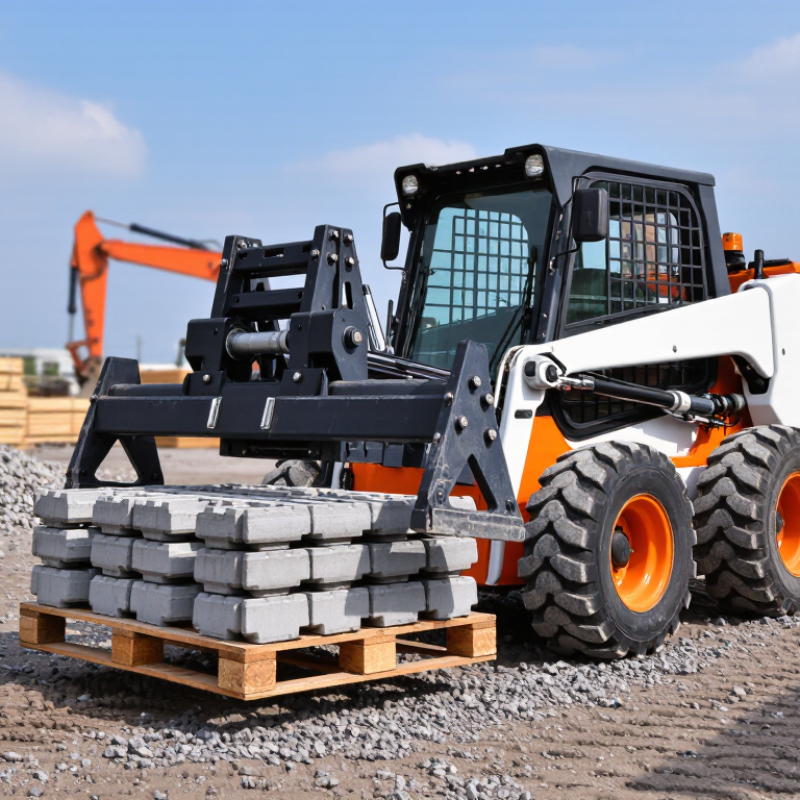
How to Choose the Best Skidloader Forks?

Understanding Skid Loader Fork Types and Their Uses

Skid loader forks are not all built for the same work. Standard pallet forks use two adjustable tines to lift boxed goods, lumber, or palletized supplies. They suit warehouses, farms, and construction sites where loads are stable and balanced. Check the fork rating and load center against the machine’s capacity; a heavy pallet held far forward can reduce safe lifting ability. Shorter tines can improve control in tight spaces.

Heavy-duty forks have thicker tines and stronger frames for dense materials, such as stacked blocks or steel bundles. Utility forks often include a backrest or wider frame to help steady irregular loads. Hay and bale forks use pointed tines that slide into compact bales, while debris forks have closely spaced tines for sorting brush and loose material. They are not interchangeable. A sharp tine can damage a pallet or puncture wrapped goods.

Match the attachment to the loads you handle most often, then check the loader’s mounting system, hydraulic needs, and rated capacity. Measure your usual pallet before choosing tine length. Too short, and the load may not sit securely; too long, and the tips can catch nearby objects. There is no perfect fork for every job. I would still inspect welds, tine wear, and locking pins before each shift, even when the attachment looks sound.

Checking Compatibility with Your Skid Loader

How to Choose the Best Skidloader Forks?

Checking Compatibility with Your Skid Loader

Before comparing fork length or price, identify the attachment interface on your skid loader. A quick-attach plate must seat fully and lock without forcing the handles. Small differences in plate shape can affect fit. Fit matters. Check the machine’s manual for its rated operating capacity and approved attachment limits. Forks may fit physically yet exceed what the loader can safely lift, especially when the load sits far forward. Measure the fork spacing and consider the pallet sizes, bundles, or materials you handle most often.

Confirm the fork frame’s capacity at the stated load center, not just its maximum rating. A long load shifts weight outward and can reduce usable capacity. If the forks use hydraulics, verify the coupler type, hose reach, and required hydraulic flow. No guesswork here. Inspect the locking pins, welds, and fork heels for wear before use. A seller’s fit chart can help, but it may not cover every machine configuration; compare its details with your manual or ask a qualified dealer to verify them. I’d also check the attachment with the loader off, then confirm the latch is fully engaged before lifting. Even a careful check can miss something. Recheck after the first low, controlled lift.

Matching Fork Capacity to Your Loads

How to Choose the Best Skidloader Forks?

Matching Fork Capacity to Your Loads

Fork capacity should match the heaviest load you actually plan to lift, not an occasional guess. Check the fork manufacturer’s rated capacity and compare it with your loader’s operating capacity. The lower limit matters. Also account for the load center: a bulky pallet that extends beyond the fork tips can reduce safe lifting capacity. A compact stack of bagged material may weigh less but sit unevenly. That changes how the load behaves.

Look at each fork’s rating, then consider the pair’s combined capacity and your machine’s attachment limits. Ratings may assume a specific load center, so confirm the details in the equipment documentation. Fork length and spacing should support the load without leaving its center of gravity far forward. Before lifting, inspect the fork heels, tips, locking system, and quick-attach connection. A bent fork is not a minor detail. I’ve seen operators focus on weight and overlook how a long load shifts during a turn; it is an easy mistake to repeat.

Tips: Weigh unfamiliar loads when possible. Check the plate. Keep the load low while traveling, and avoid sharp turns with raised forks. If the capacity or load position is uncertain, stop and verify it with the equipment manual or a qualified dealer.

Comparing Fork Materials, Lengths, and Design Features

How to Choose the Best Skidloader Forks?

Fork material affects durability, weight, and upkeep. Forged steel forks are built for demanding work, but their added weight can reduce available lift capacity. High-strength steel may offer a lighter option, depending on its rating and construction. Check the rated capacity, not just the material description. Paint and coatings help resist corrosion, but they do not make a fork stronger. Details matter.

Fork length should match the loads you actually handle. Shorter tines are easier to maneuver in tight barns or busy yards. Longer tines support pallets with deeper pockets, but they move the load’s center farther from the loader. That can reduce safe lifting capacity. A 48-inch fork may suit common pallets, while bulky or deep loads may need more reach. Confirm capacity at the stated load center in the loader and attachment manuals.

Look at the heel, tine taper, backrest, and locking system. A tapered tip slides under pallets more easily; a reinforced heel helps resist wear where the tine meets the frame. The backrest should support loads without blocking too much of the operator’s view. Verify that the fork frame fits your attachment and locks securely. I would not claim one design works best everywhere. It is easy to choose by price alone, then discover the tines are awkward for the work. Check for bends, cracks, and uneven wear regularly.

How to Choose the Best Skidloader Forks? — Comparing Fork Materials, Lengths, and Design Features

Comparison Dimension Option Typical Characteristics Best Suited For Selection Considerations
Fork material Heat-treated alloy steel Commonly used for load-bearing fork blades; heat treatment can improve strength and wear resistance. General material handling, pallet work, and frequent use. Check the fork’s rated capacity, wear limits, and compatibility with the carriage. Material type alone does not establish safe capacity.
Fork material Carbon steel Used in some fork components and lighter-duty designs; performance depends on the steel grade, dimensions, and manufacturing process. Light-duty or occasional handling when the attachment is properly rated. Compare the complete fork assembly’s rating and construction rather than choosing by material name alone.
Fork length 36 inches Shorter blades are generally easier to maneuver in confined areas and add less forward reach. Tight workspaces and smaller or compact loads. Make sure the blades support the load adequately; short forks may not fully support long pallets or bulky loads.
Fork length 42 inches A commonly available middle-ground length that balances reach and maneuverability. Mixed-use handling where loads vary in size. Verify that the fork length and load center match the machine’s capacity information and the load being handled.
Fork length 48 inches Provides more blade support for longer loads but increases forward reach and may reduce available lifting capacity. Long pallets, lumber bundles, and other loads needing additional support. Capacity can change with load center and attachment configuration. Consult the loader and attachment ratings before lifting.
Fork design Adjustable fork spacing Forks can be repositioned along the carriage to suit different pallet widths and load layouts. Operators handling a variety of pallet sizes. Set both forks symmetrically where practical and secure them using the carriage’s locking mechanism before use.
Fork design Fixed-position forks Forks remain at a set spacing, providing a simple setup for repeat handling tasks. Work involving consistent pallet or load dimensions. Confirm the fixed spacing fits the loads you handle; unsuitable spacing can cause instability or poor load support.
Fork design Fork positioner A hydraulic mechanism moves the forks closer together or farther apart from the operator’s controls. Frequent changes in pallet width or operations where faster adjustment is useful. Requires compatible hydraulics and controls. Account for attachment weight and follow the loader’s operating limits.
Fork interface Carriage-mounted attachment Forks fit onto a fork carriage designed to hold and position the blades. Applications requiring replaceable or adjustable forks. Check carriage dimensions, fork class, locking arrangement, and loader attachment compatibility.
Capacity and safety Rated capacity and load center Capacity is specific to the fork or attachment configuration and is affected by how far the load’s center of gravity is from the fork face. Every lifting application. Use the lowest applicable rating for the loader, attachment, and forks. Keep loads stable, evenly supported, and within the rated load center.

Note: Fork dimensions and ratings vary by attachment design. Always consult the loader and fork documentation, inspect forks for cracks, bends, or excessive wear, and never exceed the applicable rated capacity.

Evaluating Safety, Durability, and Maintenance Needs

Choosing skidloader forks safely starts with matching them to the machine and the work. Check the rated capacity, load center, carrier fit, and locking pins before lifting. A fork’s capacity can change with load position, so keep heavy material close to the backrest and follow the machine’s load chart. That detail is easy to miss. Fork length and spacing should also suit the pallets or materials you handle; overly long forks can make loads harder to control.

Durability depends on more than thick-looking steel. Inspect the tines, heels, welds, and mounting points for cracks, bends, or uneven wear. Pay close attention to the fork heels, where repeated contact can gradually reduce strength. I would not treat a clean appearance as proof of safety. A quick glance helps, but it cannot reveal every problem. If a fork looks deformed or damaged, stop using it and arrange a qualified inspection rather than trying to straighten or heat it.

Maintenance is simple, but consistency matters. Clear packed mud and debris after use, and check locking hardware before each shift. Follow the attachment maker’s care guidance for any moving parts. Keep a basic inspection record; it can help reveal wear that is hard to notice day by day. Even with good upkeep, forks wear out. Deciding when to replace them is not always obvious, so avoid guessing when damage or capacity is in question.

How Load Center Affects Fork Capacity

An increasing load center reduces the idealized capacity index, highlighting why safe fork selection depends on keeping loads close to the fork heels.

How to read this: The index is calculated as 24 inches divided by the load center, multiplied by 100, assuming a constant load moment. It is a comparison aid, not a rated capacity. Always check the loader and attachment ratings, load position, and fork condition; follow the equipment manufacturer’s guidance.

FAQS

How should I choose fork capacity?

Match the rating to your heaviest planned load and your loader’s operating capacity. Use the lower limit. Check the equipment documentation.

Why does load center matter?

A pallet extending past the fork tips shifts weight forward and can reduce safe lifting capacity. Bulky loads may behave unevenly. Easy to miss.

Should I check each fork or the pair?

Check each fork’s rating, the pair’s combined capacity, and your attachment’s limits. Confirm the stated load center before lifting.

What fork length works for common pallets?

A 48-inch fork may suit many pallets. Longer tines can support deeper loads, but move the load’s center farther forward.

Are heavier steel forks always better?

No. Forged steel can handle demanding work, but its added weight may reduce available lift capacity. Check the rating, not just the material.

Which design details should I inspect?

Check the heel, tine taper, backrest, and locking system. A tapered tip can slide beneath pallets more easily. The backrest should not block too much view.

What should I inspect before use?

Look for bends, cracks, uneven wear, and problems with the quick-attach connection. A bent fork is not a small detail.

How should I travel with a load?

Keep the load low and avoid sharp turns with raised forks. Weigh unfamiliar loads when possible. I would double-check any uncertain load position.

Conclusion

Choosing the right Skidloader Forks starts with understanding the different fork types and the jobs they are designed to handle. Consider the materials you move, the working conditions, and whether a particular fork design suits your daily tasks. Before purchasing, check that the forks are compatible with your skid loader’s attachment system and operating requirements.

Next, match the forks’ rated capacity to the loads you expect to lift, allowing for safe and stable handling. Compare tine length, material, and construction features to find a balance between reach, strength, and maneuverability. Finally, consider safety features, durability, and maintenance needs. Inspecting forks regularly and following proper operating practices can help maintain reliable performance and support safer, more efficient work over time.

Liam

Liam

Liam is a dedicated marketing professional with a profound expertise in the industry, where he excels at highlighting the unique advantages of our core products. With a keen understanding of market trends and consumer needs, Liam frequently updates our company’s professional blog, providing......