
Wings Machinery Wings Machinery

How to Choose the Best All Terrain Forklift?

Time:2026-09-22 Author:Aria
0%

Choosing the right All Terrain Forklift begins with the ground beneath its tires. Construction sites, farms, timber yards, and infrastructure projects rarely offer smooth surfaces. Mud, loose gravel, slopes, and changing loads can challenge even a powerful machine. A forklift that looks impressive in a brochure may perform poorly beside a wet excavation trench.

Industry data supports a careful approach. The U.S. Occupational Safety and Health Administration estimates that forklifts cause about 85 workplace fatalities and 35,000 serious injuries annually. OSHA also highlights training, stability, visibility, and safe operating conditions as critical controls. ANSI/ITSDF B56.6 provides specific safety guidance for rough-terrain forklift trucks. These standards should shape your evaluation, not merely confirm it afterward.

Market research from Grand View Research and Fortune Business Insights shows continued growth in material-handling equipment, supported by construction, warehousing, agriculture, and infrastructure spending. However, market forecasts differ widely. That difference matters. It reminds buyers to examine actual job requirements instead of trusting a single growth figure. Consider rated capacity, lift height, tire design, ground clearance, steering response, operator visibility, attachments, and service support. A 5,000-pound rating means little if the load center is misunderstood. It can become dangerous.

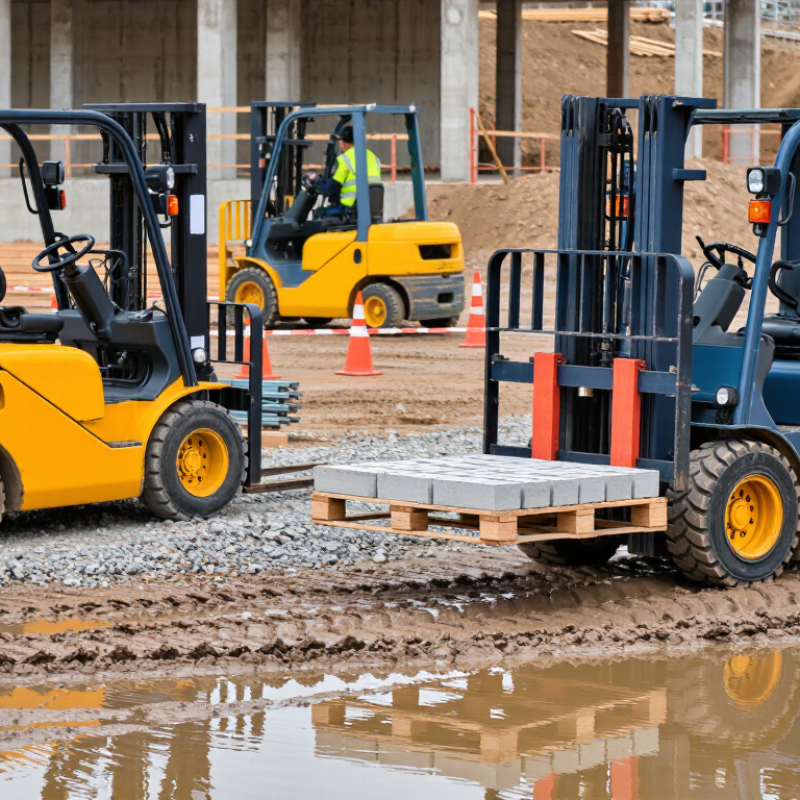
Look closely at daily work. Will the machine carry palletized concrete across uneven gravel? Will it unload steel near a narrow boundary? Small details reveal major requirements. This guide offers a practical framework, but it cannot replace a site assessment or trained operator feedback. Some recommendations may need adjustment. That is normal. The best purchase balances verified specifications, field experience, lifecycle cost, and responsible operation.
How to Choose the Best All Terrain Forklift?

What Is an All-Terrain Forklift and Where Is It Used?

An all-terrain forklift is a lifting machine designed for uneven outdoor surfaces. Unlike warehouse forklifts, it uses large pneumatic tires and stronger ground clearance. Many models include a diesel engine, a wide stabilizing stance, and a mast built for outdoor visibility. These features help it travel across gravel, mud, slopes, and compacted soil. It is not simply a warehouse forklift with larger tires.

Construction sites use all-terrain forklifts to move steel frames, timber, bricks, pipes, and loaded pallets. Farms rely on them for feed bags, equipment parts, and wrapped hay. They also work around lumber yards, landscaping projects, utility work, and temporary outdoor storage areas. In field inspections, operators often value traction more than maximum lifting height. A machine that reaches high but struggles in wet soil can delay work.

Choosing the right forklift requires careful attention to ground conditions. Check the rated capacity, lift height, tire pattern, turning space, and attachment compatibility. Measure the heaviest load, including unevenly distributed weight. That detail matters. A long load may shift during travel, especially on a slope. Operators should also consider controls, visibility, service access, and weather protection. It is tempting to select the largest machine available. That choice can waste fuel and reduce maneuverability. I have seen project plans underestimate soft ground, so a site trial remains useful before purchase.

Which Worksite Conditions Should Guide Your Forklift Choice?

Choosing the best all terrain forklift starts with the worksite, not the machine’s advertised lifting capacity. Walk the route before comparing specifications. Note loose gravel, wet soil, slopes, potholes, and narrow entrances. A muddy yard may demand deep-tread tires and strong traction. A finished concrete area may need smoother tires and tighter steering.

Load weight is only one part of the decision. Measure the load’s height, width, center of gravity, and frequency of movement. A bulky load can become unstable long before reaching the rated capacity. Check the load chart for the actual lift height and attachment used. Do not rely on memory. Keep clear visibility around stacked materials, especially near blind corners and changing sunlight.

Weather also changes performance. Rain can soften ground and reduce braking control, while cold conditions may affect fluids and battery output. Choose ground clearance according to ruts, debris, and uneven ramps. Review service access, inspection routines, and operator training before purchase. In practical assessments, I have seen teams overvalue engine power and underestimate turning space. That is an easy mistake. Measure the tightest passage, the steepest grade, and the heaviest regular load. Then compare those facts with verified manufacturer data and local workplace requirements. A forklift that feels powerful may still be poorly matched to the site.

How to Compare Capacity, Reach, Power, and Stability

Choosing an all-terrain forklift starts with capacity, not engine size. Check the rated load at the actual load center, lift height, and attachment. A 2,500-kilogram rating may fall sharply at 600 millimeters or higher. OSHA requires powered industrial trucks to display capacity information and receive inspections. Its safety guidance also estimates about 85 forklift-related fatalities and 34,900 serious injuries annually in the United States. Those figures make capacity verification more than paperwork.

Reach changes stability quickly. A raised load moves the combined center of gravity forward, especially on uneven ground. Compare the residual-capacity chart at your working height, not only the headline rating. Measure aisle width, ramp angle, tire clearance, and typical ground slope. Pneumatic tires improve traction on loose surfaces, while solid tires may resist punctures better. Neither choice fixes poor weight distribution. I have seen operators focus on maximum reach and overlook rear ballast requirements. That mistake is expensive.

Power should match the site, not just the load. Diesel or gas systems may suit long outdoor shifts, while electric systems can reduce local exhaust emissions. Compare continuous torque, gradeability, fuel or battery runtime, and charging access. The U.S. Department of Energy notes that idle reduction can lower fuel use in equipment operations, but savings depend on duty cycle. Test the forklift with a representative pallet, turning load, and slope. Real work is messier. A short trial often exposes stability problems that a specification sheet hides.

Which Tires, Attachments, and Safety Features Are Essential?

How to Choose the Best All Terrain Forklift?

Which Tires, Attachments, and Safety Features Are Essential?

Tires determine how confidently an all terrain forklift moves across loose soil, gravel, and wet ground. Pneumatic tires offer cushioning and useful traction on uneven construction sites. Choose deep, durable treads for mud and rough surfaces. Foam-filled tires resist punctures, but they add weight and may reduce ride comfort. Check the tire’s load rating against the forklift’s working load. A tire can look strong and still be unsuitable.

Attachments should match the materials, not just the job title. Standard forks handle pallets, while fork extensions support longer loads when properly rated and secured. Side-shifting forks improve positioning near walls and storage racks. Clamps can carry irregular materials, but they may change the truck’s capacity and balance. I have found that operators sometimes select attachments too quickly. That mistake can create blind spots or unstable loads.

Safety features deserve a close inspection. Look for a tested overhead guard, an operator restraint, bright work lights, and a clear load-capacity display. A backup alarm helps, but it cannot replace a spotter in crowded areas. A camera system may improve visibility, although mud can cover its lens within minutes. Before each shift, inspect tires, forks, hydraulic lines, mirrors, and warning devices. Keep the checklist practical. If operators skip it, the process needs improvement.

How to Evaluate Operating Costs, Maintenance, and Total Value

Choosing an all-terrain forklift starts with its real working environment, not its brochure capacity. On rough sites, energy use rises when tires sink, slopes demand extra power, and loads travel farther than expected. Record daily hours, average load weight, travel distance, and idle time for one week. Small details matter. A forklift using slightly more fuel per hour can become expensive after 1,500 annual operating hours. Compare energy cost per working hour, not only purchase price.

Maintenance should be priced before purchase. Ask for service intervals, common replacement parts, tire life, filter costs, and technician response times. Check whether operators can inspect fluid levels, brakes, steering, and mast chains safely each shift. A clear inspection log helps reveal recurring faults. I would also estimate lost production when the machine is unavailable. This figure is often ignored. A cheaper forklift may cost more if a failed tire keeps a crew waiting for two days. Maintenance estimates are never perfect; muddy seasons and overloaded attachments can change them quickly.

Total value combines productivity, safety, resale potential, and downtime risk. Compare realistic five-year costs, including energy, scheduled service, repairs, tires, training, and disposal. Then test the forklift with a representative load on the steepest surface it will face. Watch turning stability and hydraulic response. Numbers can mislead. An experienced operator may notice strain before a spreadsheet does. Recheck your assumptions every season.

How to Choose the Best All-Terrain Forklift?

Five-year ownership cost comparison by machine capacity

This planning benchmark compares typical compact, standard, and high-capacity all-terrain forklift configurations in USD. The estimate assumes 1,000 operating hours per year, diesel fuel at $4.00 per gallon, scheduled servicing, expected downtime, and the purchase price less estimated resale value after five years. Actual costs vary with terrain, load intensity, operator practices, and local service rates.

FAQS

How should I compare an all-terrain forklift’s lifting capacity?

Check rated capacity at the actual load center, lift height, and attachment. A 2,500-kilogram rating may drop sharply at 600 millimeters. Read the residual-capacity chart. Do not trust the headline number alone.

Why does reach affect forklift stability?

A raised load shifts the combined center of gravity forward. Uneven ground makes this movement more serious. Measure aisle width, ramp angle, tire clearance, and ground slope. I once focused too much on maximum reach. That was an expensive assumption.

Which tires work best on rough outdoor surfaces?

Pneumatic tires provide cushioning and traction on gravel, soil, and wet ground. Deep treads help in mud. Solid tires resist punctures but may transmit more vibration. Foam-filled tires add weight and can reduce comfort. Always compare the tire rating with the working load.

How do attachments change forklift performance?

Standard forks suit pallets, while extensions support longer loads when correctly rated and secured. Side-shifting forks improve positioning beside walls or racks. Clamps handle irregular materials but may reduce capacity. They can also create blind spots. Check the attachment chart before lifting.

Which safety features should I inspect before each shift?

Look for an overhead guard, operator restraint, work lights, mirrors, and a visible capacity display. Inspect tires, forks, hydraulic lines, brakes, and warning devices. A backup alarm helps. It is not enough. Use a spotter in crowded areas when visibility remains limited.

Should I choose diesel, gas, or electric power?

Match the power system to duty cycle, site conditions, and charging access. Outdoor shifts may require long runtime and strong gradeability. Electric systems can reduce local exhaust emissions. Compare continuous torque, operating hours, idle time, and energy cost. A short site trial may reveal hidden weaknesses.

How can I estimate the forklift’s real operating cost?

Record daily hours, average load weight, travel distance, and idle time for one week. Calculate energy cost per working hour, not only purchase price. Include tires, filters, service, repairs, training, and downtime. Small differences become significant after 1,500 annual hours. My estimates would still be imperfect.

What should a practical forklift trial include?

Use a representative pallet, turning load, ramp, and roughest normal surface. Watch turning stability, hydraulic response, tire clearance, and operator visibility. Test the attachment you will actually use. A specification sheet can hide problems. Real work is messier.

Conclusion

Choosing the right All Terrain Forklift starts with understanding the demands of your worksite. These forklifts are designed to handle uneven ground, outdoor construction areas, farms, yards, and other challenging environments where standard warehouse forklifts may not perform well. Consider the terrain, available space, weather conditions, load types, lifting height, and frequency of use before making a decision. A clear assessment of site conditions will help determine the most suitable size, design, and operating capabilities.

When comparing models, focus on load capacity, reach, engine or power system, stability, and maneuverability. Durable tires, practical attachments, reliable brakes, protective operator features, and clear visibility are also essential for safe and efficient operation. In addition, evaluate fuel or energy consumption, routine maintenance requirements, parts availability, operator training needs, and long-term durability. The best choice is not always the model with the highest capacity, but the one that provides dependable performance, manageable operating costs, and strong overall value for your specific applications.

Aria

Aria

Aria is a dedicated marketing professional with a deep passion for innovative strategies and a keen understanding of our company's product offerings. With a wealth of experience in the industry, Aria excels at crafting engaging content that highlights the unique features and benefits of our......