
Wings Machinery
In today's evolving market, choosing the right Skidloader Forks is essential for global buyers. These accessories enhance productivity and efficiency, making them pivotal in various industries. Buyers face a multitude of options. It can be overwhelming to decide which forks suit their needs best.
Skidloader Forks come in different sizes and designs. The choice depends on specific tasks and machinery compatibility. For instance, heavy-duty forks are ideal for lifting boulders or large pallets, while lighter versions suit smaller loads. Moreover, the material and construction quality play a critical role in durability and performance.
As buyers assess their needs, they should consider factors such as load capacity and intended use. Many overlook these aspects, leading to less optimal choices. An informed decision can significantly impact operations. Understanding how different features affect performance is vital. Buyers should engage with manufacturers and seek expert advice to make the best choice.
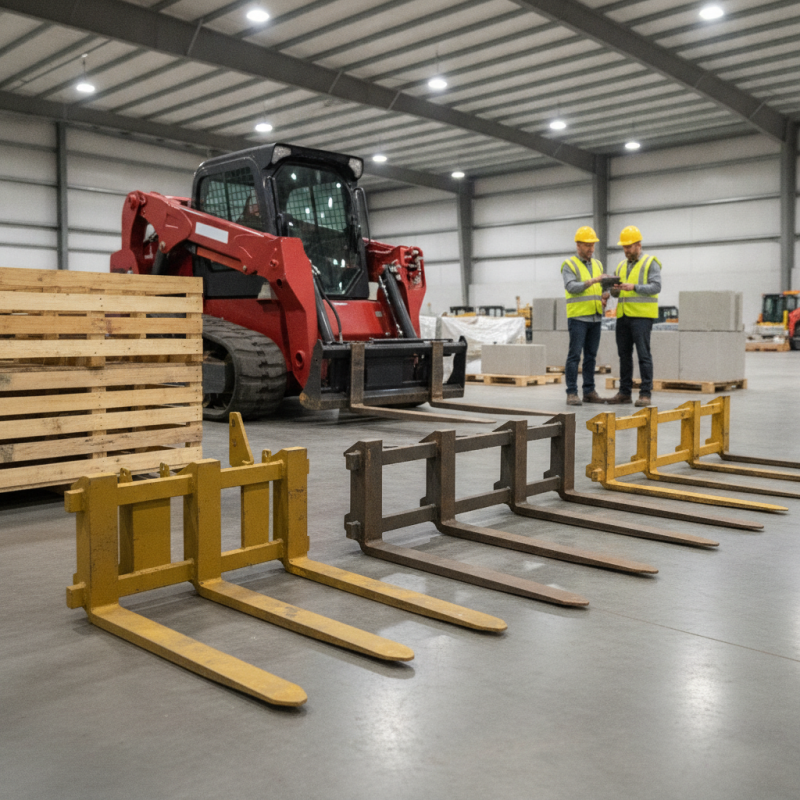
When selecting skidloader forks in 2026, several key considerations emerge. The material quality of the forks is paramount. Strong steel construction can enhance durability, while lightweight options can improve maneuverability. Buyers should assess the intended use. Heavy-duty tasks may require robust forks, while lighter applications might benefit from slimmer designs.
Choosing the right attachment size is critical. Incompatible sizes can lead to inefficiency and operational hazards. It's advisable to match fork dimensions with the skidloader's specifications. Check the weight capacity too. Overloading can compromise safety and performance. Understanding your workload is essential for making the right choice.
Tips: Always review user feedback. Real-world experiences can highlight benefits and drawbacks you might not see. Ensure to verify the fork's lifting capacity against your heaviest tasks. Frequent inspection of the forks for wear can prevent unexpected failures. Remember, even the best forks require proper maintenance. Neglecting this aspect could lead to costly repairs or accidents.
Choosing the right skidloader forks can be a daunting task for global buyers. The market offers various options, each designed to serve specific needs. Reports indicate that approximately 35% of buyers prioritize versatility. This is crucial when dealing with diverse materials. Standard forks work well for pallets, but specialized forks excel in specific tasks.
The three main types of skidloader forks are pallet forks, material handling forks, and tree forks. Pallet forks support standard pallets. Material handling forks are adaptable, enhancing utility across different materials. In terms of weight capacity, they can generally lift loads ranging from 1,500 to 3,500 pounds. Tree forks, on the other hand, cater specifically to the forestry sector. These forks are essential for transporting logs and trees efficiently.
As the demand for skidloaders rises, so does the need for quality forks. Industry data shows global skidloader demand peaked at 12% growth in the last year. However, many buyers struggle with compatibility issues. Ensuring the right attachment for specific machines can be challenging. Often, buyers overlook the importance of checking load ratings. Miscalculations can lead to inefficient operations. Understanding these differences is pivotal for making informed decisions.
When selecting skidloader forks, several key features come into play. First, durability is paramount. Well-built forks often have a heavy-duty frame. This minimizes bending and breaking, ensuring they can handle tough jobs. According to industry reports, forks made from high-strength steel perform better under stress, reducing maintenance costs.
Another vital feature is the fork length. Standard lengths vary from 42 to 60 inches. Longer forks increase load capacity but may hinder maneuverability. Buyers should consider the weight they typically lift. A balance between size and usability is essential.
Tips: Always inspect the forks for wear and weld quality before buying. A visual check can reveal potential issues. Lastly, consider the fork's weight. Heavier forks sometimes offer better stability but can also decrease efficiency.
Additionally, ensure compatibility with your skid loader model. Forks need to fit securely for safe operation. Industry data suggests that mismatched equipment increases the risk of accidents. This emphasizes the importance of verifying specifications before making a purchase.
| Feature | Description | Importance Rating (1-5) |
|---|---|---|
| Material | Typically made from high-strength steel for durability. | 5 |
| Weight Capacity | Designed to lift and transport heavy loads efficiently. | 5 |
| Fork Length | Varies to accommodate different load sizes. | 4 |
| Versatility | Compatible with various attachments and equipment. | 4 |
| Ease of Installation | Quick and simple to mount on skidloaders. | 5 |
| Safety Features | Design includes features to minimize accidents. | 5 |
When choosing skidloader forks, budgeting is key. Prices can vary widely based on material, size, and load capacity. Buyers should focus on what they need for their specific tasks. For example, heavier-duty forks tend to be more expensive but offer better durability. This can be a worthwhile investment for frequent users.
Tips: Always compare prices from different suppliers. It’s essential to factor in shipping costs as well. Sometimes, a lower upfront cost can lead to higher long-term expenses, particularly if the equipment needs frequent repairs.
Consider the potential return on your investment. A higher cost for superior quality might save on repairs in the long run. Inspecting the material and design of forks can help identify more durable options. Don’t hesitate to ask for expert opinions or reviews on specific products.
Choosing the right forks is a balance between budget and quality. Reflect on the tasks at hand and how often you will use the skidloader. Matching your choice to your needs can lead to better efficiency and productivity.
When selecting skidloader forks, global buyers benefit from exploring a variety of brands and manufacturers. The choice of forks impacts efficiency and productivity in various tasks. Different designs cater to unique needs, from construction to agriculture. It's crucial to assess load capacity and durability. Understanding materials used can lead to better decisions.
Many reputable manufacturers offer forks tailored for specific applications. Some focus on lightweight options for ease of use. Others prioritize heavy-duty versions for demanding jobs. Buyers might face challenges in ensuring compatibility with their skidloaders. Researching detailed specifications helps prevent costly mistakes.
The market is vast, presenting both exciting opportunities and tough choices. It's easy to overlook lesser-known brands; however, they often provide innovative solutions. Quality should guide your selection process. As global buyers, staying informed about industry trends can enhance decision-making. Remember, making an informed choice today sets the foundation for future productivity.
: Key considerations include material quality, intended use, and fork size compatibility.
Strong steel enhances durability, while lightweight materials improve maneuverability for specific tasks.
Incompatible sizes can lead to inefficiency and operational hazards during use.
Understanding weight capacity prevents overloading, which can compromise safety and performance.
Compare prices, check long-term costs, and consider durability to find the best balance between budget and quality.
Review user feedback and inspect materials to identify durable options that fit your needs.
Regular inspection for wear and proper maintenance prevent unexpected failures and costly repairs.
User experiences reveal insights about the benefits and drawbacks that may not be obvious initially.
Diverse options can meet unique needs for various tasks and enhance efficiency.
Ensuring compatibility with your skidloader and selecting the right design can be tricky without proper research.
In 2026, selecting the right Skidloader Forks is crucial for optimizing performance and efficiency in various applications. When choosing Skidloader Forks, buyers should consider key factors such as the type of tasks they will be performing, the material and design of the forks, and the compatibility with existing equipment. Different types of Skidloader Forks are available to suit various needs, from heavy-duty forks for more challenging loads to lightweight options for smaller tasks.
Potential buyers should also focus on essential features such as adjustable forks, weight capacity, and ease of installation. A thorough price comparison and budgeting strategy will help buyers navigate the market effectively to find Skidloader Forks that meet their needs without exceeding their budget. Exploring a variety of global brands and manufacturers will provide options that cater to diverse requirements, enabling buyers to make informed decisions for their operational needs.
